

System Dynamics | Foundation 0
Complexity Begins: The Zeroeth Law of Everything

The “Foundation” series turns key lessons into practical tools to understand, and even predict how things work. You’ll learn why resolutions fail, why some ideas spread, and how to spot organizational problems by examining structure.
Think about the last time you tried to change something important in your life -a habit, a relationship, a work process- and it stubbornly refused to change. Or worse, it seemed to change for a while, then snapped back to exactly where it started.
You're not alone. This same frustration plays out everywhere: companies that reorganize every few years yet keep having the same problems, governments that pass new laws but see the same issues persist, diets that work temporarily before old eating patterns return.
The problem isn't lack of willpower or bad intentions. The problem is that we're trying to change outcomes without understanding the systems that create them.
Two Ways of Seeing
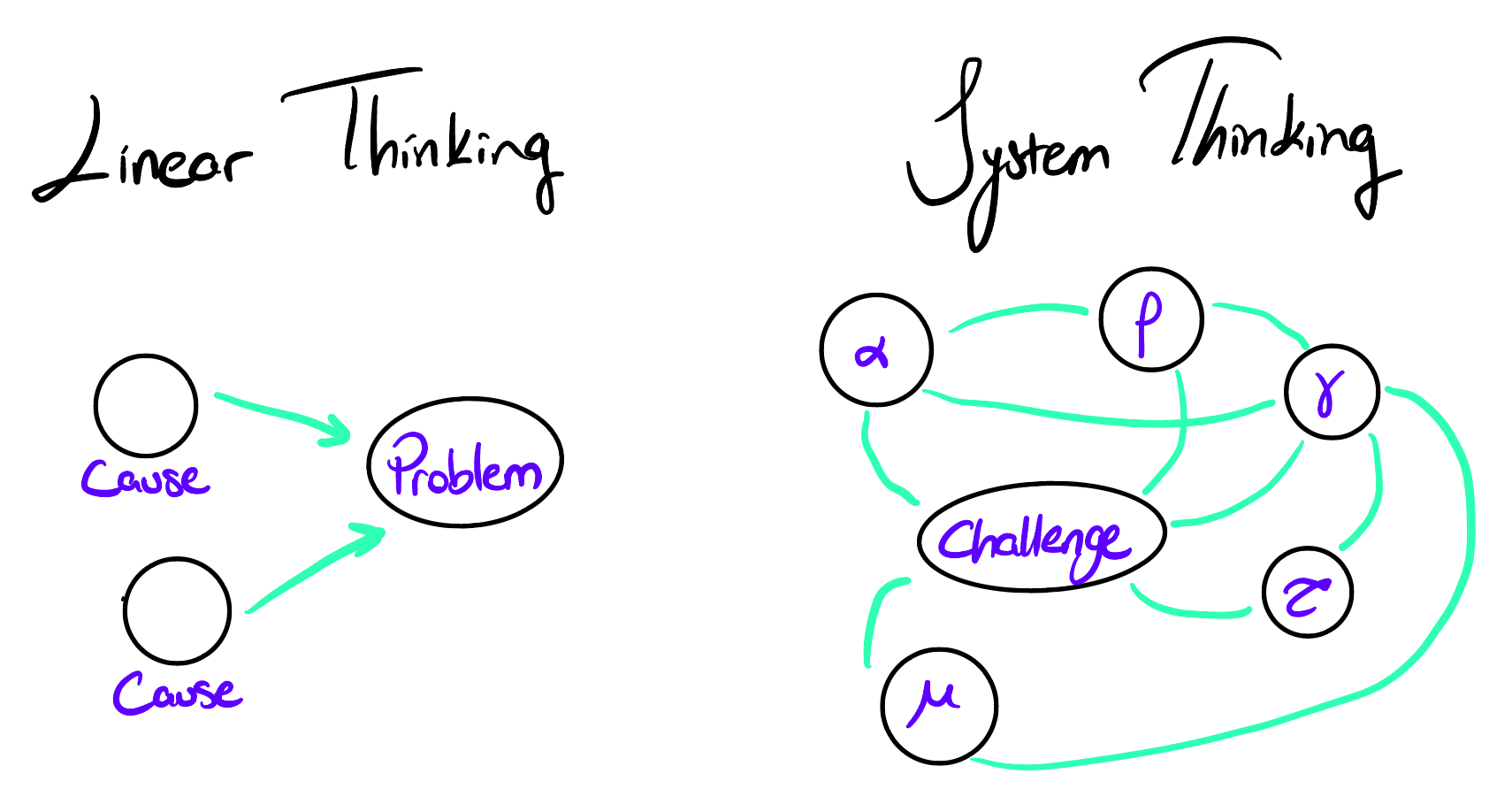
Since the Industrial Revolution, Western thinking has excelled at finding problems “out there”, breaking problems down into manageable pieces. We analyze, trace direct cause-and-effect relationships, and solve problems by fixing their components. This reductionist approach has given us remarkable victories: we've eliminated smallpox, doubled crop yields, and put computers in our pockets.
But long before anyone taught us to think analytically, we all learned to navigate complex systems holistically. Every conversation you have, every family dynamic, every organization you join, these are all complex systems. You developed an intuitive understanding of how they work without formal training, often without words.
Here's the tension: psychologically and politically, we'd much rather believe that problems come from "out there" rather than "in here." External fixes feel more controllable, more satisfying. And sometimes they work brilliantly.
But some problems, the really persistent ones, refuse to go away despite our best analytical efforts. Hunger, poverty, economic instability, chronic disease, drug addiction, climate change. These persist not because we lack intelligence or resources, but because they are systems problems. They're produced by the structure of the systems themselves.
The Hidden Truth About "Side Effects"
We casually talk about side effects as if they're just an unfortunate feature of reality. A medication helps your heart but damages your liver. An efficiency program improves productivity but destroys morale. A social media platform connects people but spreads misinformation.
Here's a radical thought: there are no side effects. There are only effects. Calling some effects "side effects" reveals that our understanding of the system is narrow and incomplete.
The flu virus doesn't attack you, you create the conditions for it to flourish within you. Political leaders don't cause economic recessions, booms and busts are built into the structure of market economies. Your teenager isn't being difficult to spite you, they're responding predictably to the social and biological systems they're embedded in.
This system perspective shift is both obvious and subversive. Once you see the relationship between structure and behavior, everything changes. You begin to understand why systems produce the results they do, and more importantly, how to shift them into better patterns.
What Is a “System” anyway?
A system is more than a collection of parts. It's a set of interconnected elements, people, ideas, molecules, institutions, that produces its own characteristic behavior over time.
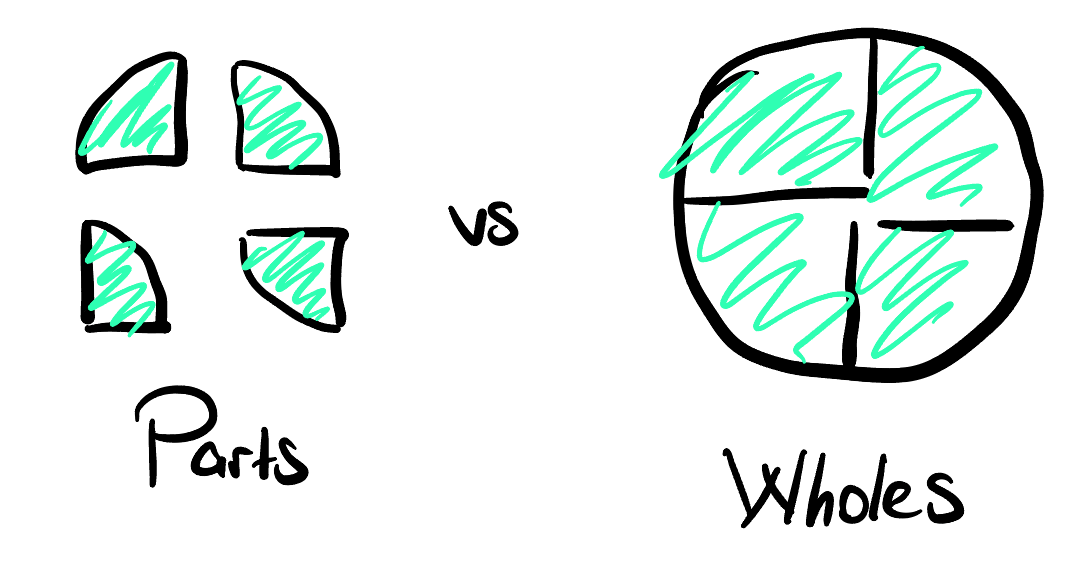
Think of your morning routine. It's not just a series of isolated actions. Each step influences the next. If your alarm doesn't go off, you skip breakfast, which makes you irritable, which affects your first meeting, which influences your entire day. The routine has emergent properties, patterns that arise from the interactions between its parts.
Systems can be influenced by outside forces, but their response is characteristic of their internal structure. The same economic shock will affect different countries differently. The same parenting approach will work differently with different children. The system, to a large extent, causes its own behavior.
Systems are everywhere once you start looking.
Basic examples can be:
Your morning routine (skip coffee → grumpy → bad meeting → stressed day)
Traffic flows (one accident → bottleneck → hours of ripple effects)
Home thermostat (set temperature → thermostat detects the difference → heater turns on → target temperature reached → heater turns off → thermostat continues monitoring…)
Your own habits (tired → order takeout → feel guilty → stress eat → more tired)
Most systems around you work the same way, just with more complex parts and relationships. System thinkers call these common structures that produce specific behaviors “archetypes” too.
The key insight? The system's structure determines its behavior. Change the structure, change the results.
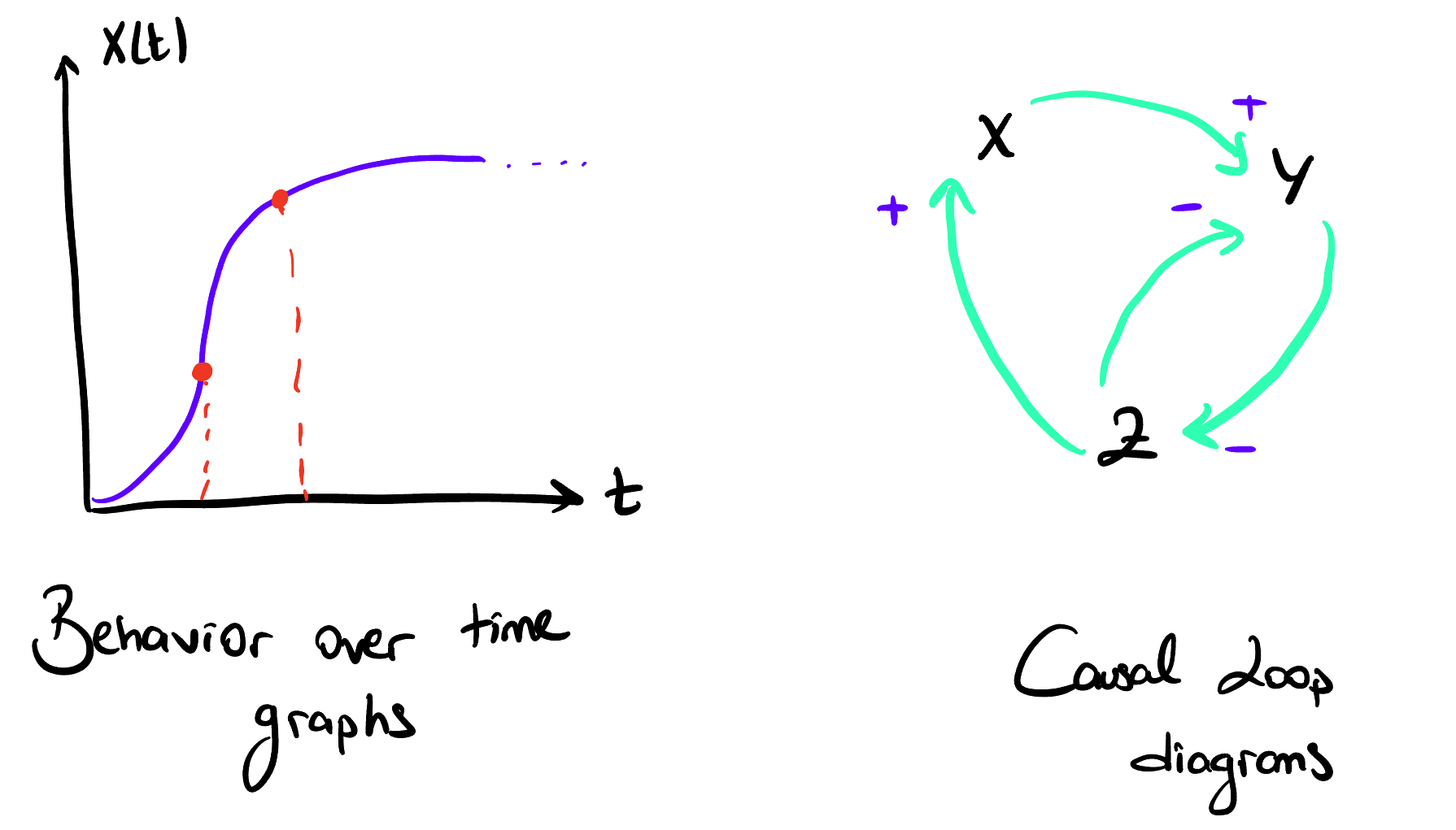
Systems also don't operate in straight lines, this is why we will be using graphs and diagrams. They're webs of relationships, feedback loops, and circular causality. To understand them properly, you need to think in circles and see patterns, not just sequences.
In Result..
This is just the beginning. In the pieces ahead, we'll explore:
How to identify the invisible structures that govern behavior around you
Why smart people in smart organizations consistently make terrible decisions
The feedback loops that either stabilize systems or send them into chaos
Why changes often happen much faster or slower than anyone expects
How systems can suddenly jump into completely new behaviors without warning
The recurring patterns that systems thinkers have discovered across industries, cultures, and centuries
Systems thinking isn't better than analytical thinking, it's complementary. In a world that's becoming more complex, more interconnected, and more rapidly changing, we need both ways of seeing.
The goal isn't to replace your analytical mind, but to develop a systems sense alongside it. To see not just the trees or the forest, but the living ecosystem that connects them both.
If you start seeing systems.. -welcome to the club! And that changes everything. Once we see the relationship between structure and behavior, we can begin to understand how systems work, what makes them produce poor results, and how to shift them into better behavior patterns.
Because most of the time, the problem isn't the problem at all. The problem is the system that's creating the problem.
👋🏽 Before You Go
Think of a problem in your life that keeps recurring. Share in the comments. Now ask: What if this isn't a problem to be solved, but a system to be understood?
🧩 What's Coming Next
This foundations series will build your systems thinking toolkit step by step:
📚 Main Resources
Meadows, D. H. (2015). Thinking in Systems. Chelsea Green Publishing.
Sterman, J.D. (2000) Business Dynamics: Systems Thinking and Modeling for a Complex World. Irwin McGraw-Hill, Boston.
My lecture notes from “System Dynamics” and “Simulation” classes :)
Some explanations and phrasings closely follow or directly quote these sources. The text was refined for coherence and citation accuracy with the assistance of llms.
heyy during my final exam periods i always end up picking up a new hobby. I get completely absorbed in it, and before I know it, I find myself underprepared for my exams. It’s not just a bad habit, it’s also part of my temperament maybe this isn’t a problem to fix, but a system I need to understand :)))